You started because you saw a gap. A community that wasn’t being served. A problem that wasn’t being solved. And rather than waiting for someone else to fix it, you built something yourself.
Now you’re running programmes. Supporting families. Expanding services. Doing work that genuinely changes outcomes for the people you serve.
And you need funding to do more of it.
But here’s what happens in too many grant meetings, investor conversations, and partnership discussions. The person across the table hears what you’re doing and they’re interested. They visit your website to learn more. And what they find doesn’t match what you just told them.
Not because the work isn’t real. Because the website isn’t showing it.
The Over-explaining Trap
One of my clients runs a perinatal support group for Black and mixed-heritage families, by filling a gap that the NHS consistently fails to address. By the time we worked together she had supported over 302 families and delivered over 132 hours of counselling sessions. She was actively running support groups, providing resources, and building projects that directly solved the problem she’d identified.
But her website spent most of its space explaining the problem.
The lack of NHS support for Black and mixed families. The haunting statistics. The market gap. Page after page establishing why the problem existed, and not nearly enough showing that she had already been solving it for years.
Investors and funders landing on that site would have felt confused. They came to understand the organisation’s impact and instead found themselves reading about a problem they were already aware of. The 302 families, the 132 hours, the programmes running right now wasn’t visible enough to do the convincing it needed to do.
Her website refresh wasn’t about a new look. It was about flipping the narrative. Moving from “here’s the problem” to “here’s what we’ve already built to solve it, and what we could do with your support.“
That’s the difference between a website that describes a mission and one that demonstrates it.
The Layers Investors Never See
The overexplaining trap is one version of this problem. The hidden layers problem is another.
Non-profit and charitable organisations rarely have just one thing going on. There are programmes, partnerships, community projects, educational resources, advocacy work, and outcomes that span years of consistent effort. But quickly built websites when the priority was just getting something live, tend to only show the surface.
What funders and institutional partners need to see is the depth.
Not just what you do, but the scale of what you’ve already done. The evidence that your organisation has been building something real, not just talking about it.
When someone can visit your website and leave without understanding the full scope of your work, you’re leaving it to a conversation to do the convincing. And conversations end, while websites stay.
What Happens When Your Website Does Match The Work
HER University is a campus-based organisation building confident young women through sisterhood and leadership. When we relaunched their website, the goal was to make sure the full picture of what they’d built was visible: clearly, credibly, and in a way that matched the level the organisation was actually operating at.
Following the relaunch, HER University secured a second location. Funders attending grant meetings complimenting her website unprompted as: beautiful, clear, and professional. The site wasn’t just a reference point. It was actively contributing to the conversations that moved the organisation forward.
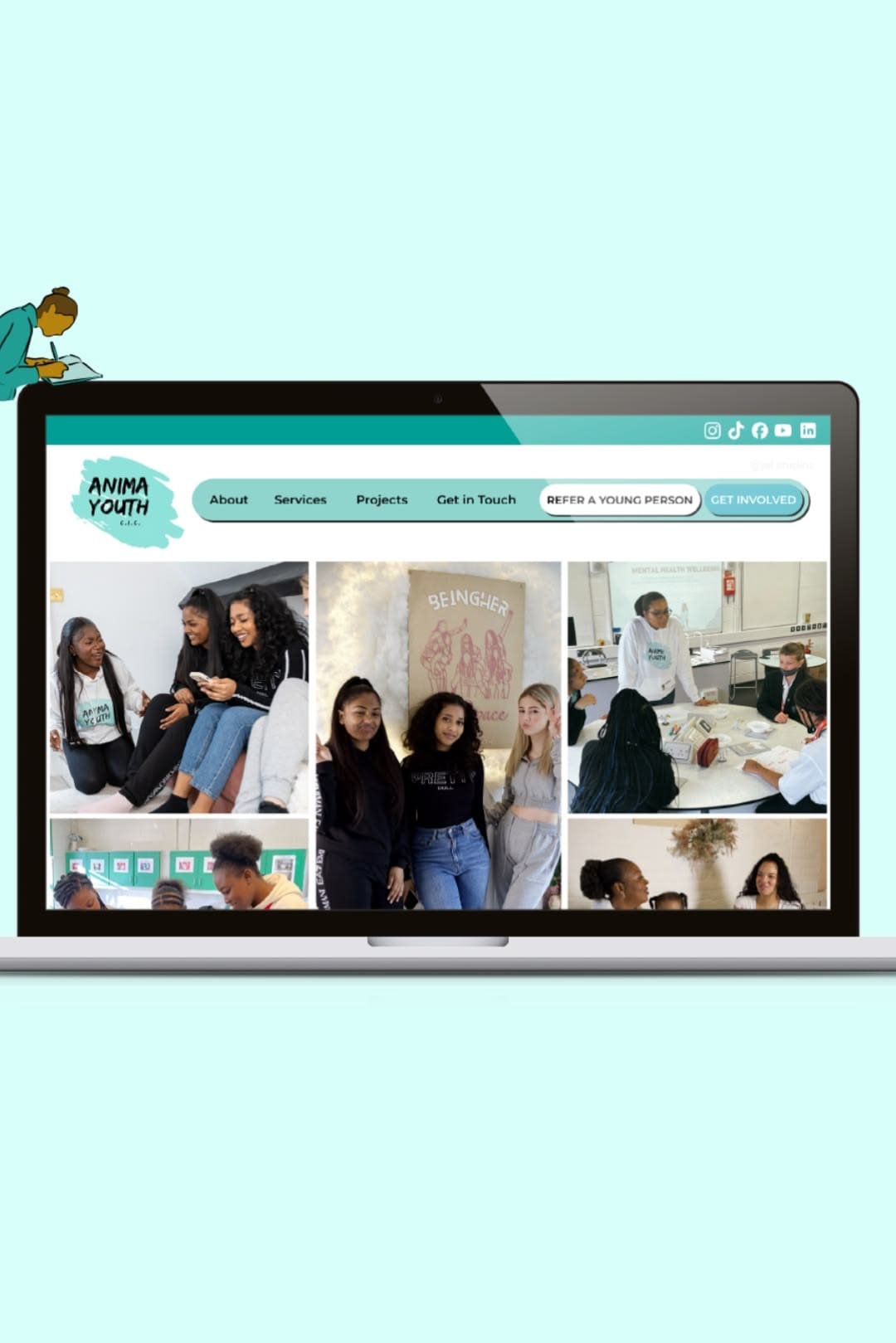
Anima Youth runs safe spaces and community activities for marginalised young girls in Croydon and South London. After their website relaunch, the organisation expanded its havens, launched new projects and support services, and extended their age range from 16-17 year olds to now include young women 18 and above. The website was rebuilt to reflect the organisation as it actually operated (not as it started), and the growth that followed reflected that repositioning.
In both cases the work was already happening. The outcomes were already real. The website just needed to catch up.
The Question Worth Asking Today
A lot can change in a year. Three years. Even a few months. The organisation you’re running today almost certainly looks different to the one you had when your website was last updated.
So ask yourself honestly:
If a funder visited your website today, would they see the full picture of what you’ve built?
Would they understand the scale of your work, the communities you’ve served, and the outcomes you’ve created?
Would the site give them the confidence to invest in what you’re doing next?
Or would they see a version that describes the problem you’re solving without showing the years of work you’ve already put into solving it?
Your website should be the thing that makes the next conversation easier. The thing that means when you walk into a pitch or send a link after a meeting, the case is already being made before you say a word.
If it isn’t doing that yet, it’s not a reflection of your impact. It’s just a reflection of where you started.
JAL Studios builds custom Showit websites for impact-led organisations preparing for funding, partnerships, and their next stage of growth. If your website isn’t reflecting the work you’re actually doing, the Impact Build package was built for exactly this moment. Start here.
0 COMMENTS