There’s a version of retail readiness that gets talked about a lot online. Get your packaging right. Sort your pricing. Have enough stock. And yes all of that matters.
But there’s another layer that founders often overlook until it costs them: your website.
Because here’s what actually happens when a retail buyer, a stockist, or an investor discovers your brand. Before they email you, before they visit your stall, before they take the meeting, they visit your website. And in those first few seconds, they’re making a decision about whether your brand is ready for the level you’re pitching at.
I’ve built Shopify websites for scaling consumer brands at exactly this stage, and the patterns repeat themselves.
Here’s what retail readiness actually looks like online.
1. You have demand and your website shows it
The first signal that a brand is retail ready is that people are already buying. Not just following or commenting. Actually purchasing, repeatedly, and coming back.
But demand that lives only on your social media page isn’t enough. A retail buyer visiting your website wants to see verified reviews from real customers, not just screenshots of DMs.
One of the simplest things you can do on Shopify is connect a review app like Judge.me to your fulfilment flow. When an order is fulfilled, the customer automatically receives a review request. That review posts directly to your product page. New customers can see real feedback from real buyers, which removes hesitation and builds the kind of trust that converts browsers into purchasers.
When a stockist visits your site and sees a product with 15+ verified reviews from customers across the country, that tells a story about demand that no pitch deck can replicate.
2. Your branding was built, not just designed
Retail readiness isn’t a pretty logo and a colour palette. It’s a brand identity that was strategised and crafted with intention. One that communicates the mission, purpose, and point of difference of the brand from the moment someone encounters it.
I’ve worked with clients who arrived with outstanding brand visuals built by designers who took the time to understand their vision properly. The difference it makes to a website is significant. When the brand elements, colour pairings, typography, and visual language are genuinely strong, the website doesn’t need to fit into a template… it fits to the brand. The online experience becomes an extension of everything the brand already communicates, not a compromise of it.
A retail buyer encounters hundreds of brands. The ones that look considered, intentional, and visually coherent at every touchpoint, e.g. packaging, social, website. They are the ones that feel like a serious business. That perception starts with the brand and it lives on the website.
3. Your messaging reflects the level you’re operating at
This is where a lot of scaling brands get stuck. They use language that makes them sound like everyone else in their category, when what they actually have is something more specific, more expert, and more valuable.
I was building a website for a menstrual care brand whose original tagline was “for everyone, for every flow.” It was warm. It was inclusive. But it was also completely generic, in comparison to hundreds of other bamboo period care brands saying exactly the same thing.
But this founder had something different. She had genuine menstrual health knowledge. She could guide women on which products were right for their specific flow, debunk myths about periods, and educate her audience in a way that no mass-market brand was doing. Her real positioning wasn’t the product, it was the expertise behind it.
So we changed the tagline to: Period care that actually understands your body.
That word “actually” did something. It drew a quiet line between her and every brand that claims to understand women without evidence. It gave her the confidence to position herself as someone doing the work, not just selling the product.
Your messaging needs to reflect the level you’re genuinely operating at, and not fit you into the language your industry defaults to. Retail buyers and stockists can tell the difference between a brand with a point of view and one that’s playing it safe.
4. Your website communicates credibility before you say a word
This is the one that founders underestimate most.
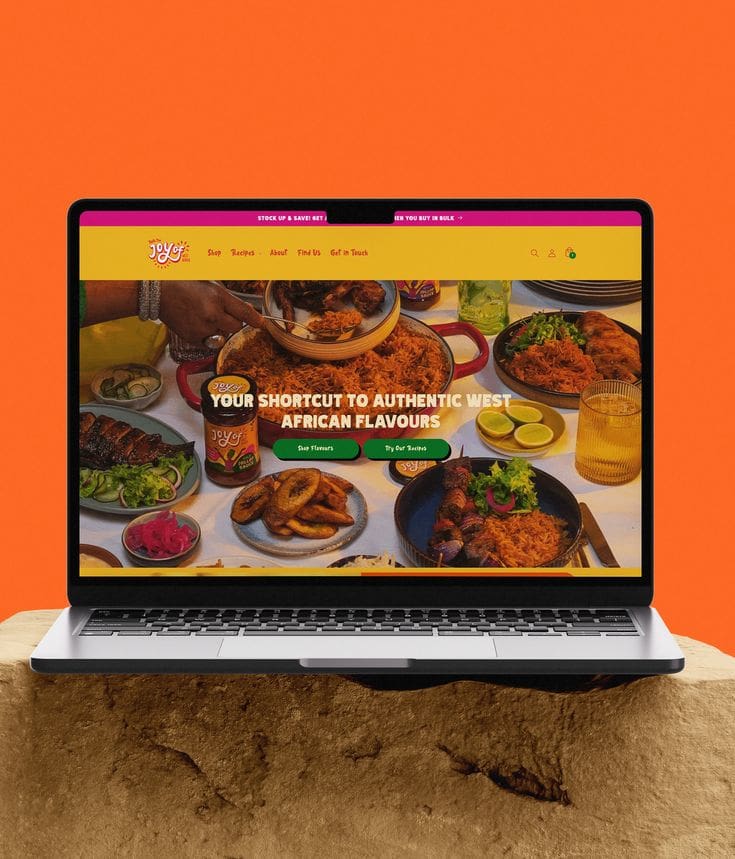
I worked with a West African sauce brand that had already secured placement in 13 SuperValu stores in Ireland before they came to me for a website. The in-store presence was real. The demand was proven. But to scale beyond Dublin and reach online customers internationally, they needed a website that matched the level they were already operating at offline.
Because here’s the thing: a retail buyer in London who discovers your brand doesn’t visit your store first. They visit your website. And if that website looks like it was built over the weekend on a free template, it creates doubt about the product quality, the fulfilment reliability, the professionalism of the business and more.
The website has to look like it belongs at the level you’re pitching at. Not aspirationally. Actually.
I’ve seen this play out on the charity and impact side too. One of my clients, a nonprofit running programmes for young women, had professionals in funding meetings comment unprompted on how beautiful and clear her website was. The information was digestible, visually coherent, and immediately engaging. It didn’t look corporate. It looked like a brand that understood its audience and took its work seriously. That perception influenced how those professionals engaged with her funding applications.
The principle is identical whether you’re pitching to a retail buyer or a grant committee. Decision makers encounter your brand digitally before they encounter it in person. The website either builds confidence or creates doubt. There’s rarely a middle ground.
So, is your Shopify website retail ready?
Ask yourself these questions:
- Does your site show verified demand from real customers, or is your social proof living only on Instagram?
- Does your brand identity translate fully online, or does your website look like a different brand to your packaging?
- Does your messaging reflect your actual point of difference, or are you using the same language as everyone else in your category?
- And honestly, if a retail buyer landed on your website today, would it reflect the level you’re operating at?
If the answer to any of those is no, the website is the gap. And that gap is worth closing before your next pitch, your next meeting, or your next opportunity to be taken seriously.
JAL Studios builds custom Shopify websites for scaling product brands preparing for retail, investor conversations, and significant relaunches. If your brand is ready for the next stage, start here.
0 COMMENTS